DD
MM
YYYY

PAGES

DD
MM
YYYY

spot_img

PAGES

Home Blog Page 6689

Xenophobia: Rwanda, Malawi, DRC, Others Pull Out of World Economic Forum

1

As the fire of xenophobia rages on in South Africa, some African countries have registered their displeasure over how the South African Government is handling the issue, by pulling out of the World Economic Forum (WEF), billed to take place in Cape Town this month. Rwanda, Democratic Republic of Congo (DRC), and Malawi, have all pulled out of the forum. Zambia has also cancelled a scheduled football match with the South African national team, Bafana Bafana.

The South Africa’s Government’s attitude toward the xenophobic attacks has been seen as enabling. In the face of obvious killing, maiming and looting of businesses belonging to foreign nationals, the security agencies seem to be missing in action.

The deputy Minister of Police, Bongani Mkongi, told the press that “South Africa cannot be surrendered to foreign nationals.” In a situation where some communities are made up of about 80% foreign nationals, it is seen as a threat to the existence of the locals.

Therefore, the attack is to eliminate as much foreign nationals as possible before they dominate South Africa.

In the light of obvious insouciance by the South African Government, other African countries are looking for ways to curtail the situation and protect the lives of their citizens.

The Nigerian Government has summoned the South African High Commission, who unremorsefully, denied the existence of xenophobia in South Africa.

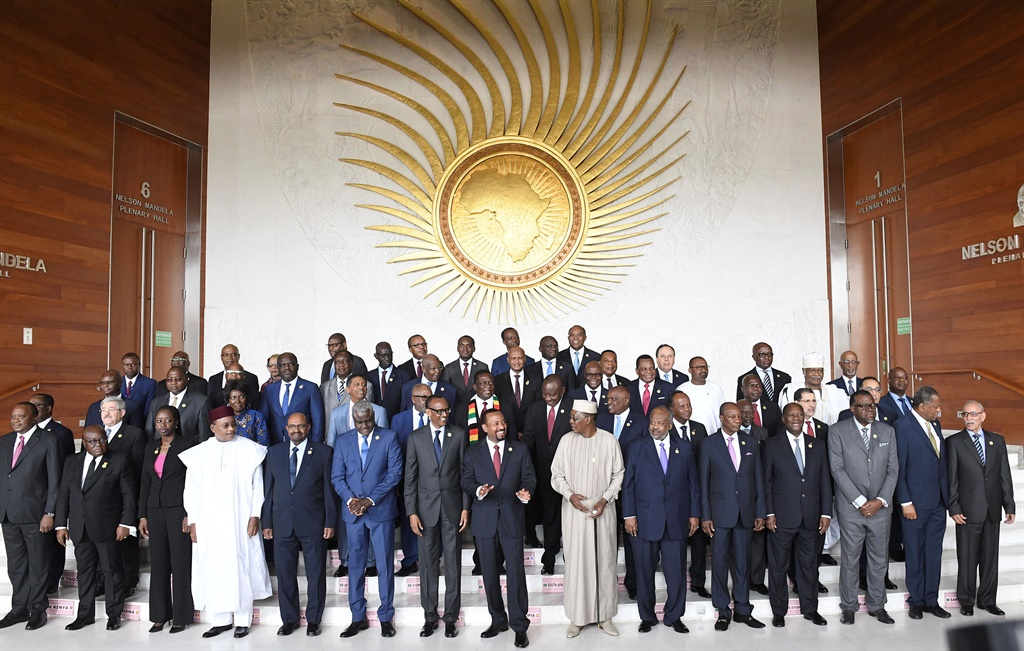
Other African leaders have strongly condemned the attacks, calling on the AU to act quickly in addressing the situation before it deteriorates to contagious reprisals.

Meanwhile, Nigerians have been protesting online and offline, in the places holding South African businesses. There have been reports of violence in those places.

The boycotting of WEF is a strong signal that may extend to other things that South Africa has to do with other African countries.

Nigerians are urging their government to follow the steps of Malawi, DRC, Rwanda and Zambia by pulling out of WEF.

Meanwhile, Nigerian singer, Burnaboy has vowed not to step into South Africa again until the South African Government takes serious steps to address issues of xenophobia.

African Leaders Have Responsibilities On Xenophobic Attacks

0

The xenophobic attack in South Africa is not new. In fact, it has been in existence since the days of Nelson Mandela.

Africans were made to see themselves differently. We don’t believe each other. Africa brother won’t patronize a fellow African brother’s service or product. The inferiority complex and mental slavery have been imbibed in us that we don’t believe in ourselves or speak good of ourselves. Confusion of the highest order.

They say Africa is one but I stand to be corrected. We have White Africa and Black Africa. Amongst White Africa is a great division. Likewise, Black Africa, we have division.

The battle for supremacy is killing us. A weak man fights for superiority over his fellow man. A case of the ”Xenophobic Attack” on Nigeria in South Africa. South Africans are weak and delusional. But who do we blame? – Leadership.

African leaders have always failed us a long time ago. They inculcated division and confusion into our lives. The battle for supremacy during elections has eaten deep into every citizen. Spreading false stories and feeding the weak African minds. We also gazumped it and act upon just like a man with no sense of his own.

Think deep Africans. No nation has ever made it by division. Growth occurs where there is unity.

It’s a shame that our education system has failed us. Africans don’t know their history. I don’t know my history. That’s why we all act like animals that have no hope.

If killing your own brother brings peace, ask countries that have experienced war in recent times. Whoever is feeding you lies about your own African brothers, is building you up for destruction. Your African brother is not your enemy. Your ego, inferiority complex, jealousy and inability to think is your enemy.

Our leaders are our worst enemies. They are feeding us lies to distract us from fighting for our rights. If you have fallen for this trick, wise up.

Besides, if our African leaders build our continent and make life easier for all, nobody would be interested in leaving his motherland.

The Big Challenge – Africans Killing Africans

When Africans start to kill Africans, then it says a lot about our mentality. There are better things Africans can invest their energy, but it’s disheartening that Africans choose to kill fellow Africans.

The xenophobic attack on Nigerians in South Africa is a shame to the African government. How do we move forward as Africans when brothers are killing brothers?

It makes me wonder what the South African President is actually doing about this? Do we have to start destroying South African businesses in Nigeria before the political leaders have to rise and quench this fire?

What type of continent is this?

African continent with black thinking, animalistic behaviours and retarded growth. The African continent where black sold black for a penny. Too many lies the black leaders told black.

Moving forward in life, black holds black. Black hates black. Even black underrates black. If African brothers can’t move freely in the African country or region, then I doubt if Africa will ever make progress.

If care is not taken, this might lead to war. Do we want war? I bet those clamouring for war have never experienced any. We don’t want war. We want peace.

African leaders, this is beyond politics. It’s time to take action before the nation starts rising against nation. If you don’t stop the killing by taking measurable actions, it could become an unquenchable fire.

It seems South Africans has quickly forgotten how Nigeria stood by them in times of trouble. Nigeria has always been nothing but good to them. Nevertheless, we won’t stop being kind to our fellow African brothers. That’s why we are the giant of Africa.

South Africans killing our Nigerian brothers in their country says a lot about their mentality. As Africans, we need orientation. If conflicts, killings and war is our best way of voicing our discontent, then we are indeed a third world country. Who does that in this present world?

As much as I love South Africa, I condemn this act and I won’t blame anyone but the leaders.

This has been going on for a while, but you did nothing. You only care about looting and feeding your animalistic ego. If it was your fellow political counterparts that go against the laws of the land, we know how you always treat them.

When you fall sick, we know how you travel overseas to get yourself treated. But when it is about your people, all you do is fold your arms and watch. Since it doesn’t affect your own family.

The black man thinking. Me-mentality is the problem with Africa. Since it doesn’t affect me, I will do nothing.

Shame on African leaders!!!

#SayNoToXenophobia

God bless Africa!

Why Nigerians Find IELTS Challenging

1

Scaling through the IELTS (International English Language Testing System) exams seems to be an uphill task for Nigerians. It is generally accepted that someone cannot write this test the first time and scale through, unless he has been studying long before the day. In fact, my elder brother said that people should make up their minds the first time they are sitting for the exam that they are there to check out the exam’s format, not to pass the exam. I was like why should I spend N75, 000 to sit for an exam just to have an experience of what the exam is like? Why won’t I pass it the first time? Of course, those that have written this exam told me to stop dreaming. Like someone pointed out, it’s not all about studying English in the higher institution; it’s about understanding what it is expected of you and then practicing it till it becomes a part of you.

I had problem accepting these views. I mean, Nigeria is an English speaking country (though as second language users), so why do we have to struggle with an exam that only wants to test our level of competency in the language. If you look at it, English is a subject of study in our schools – from nursery to tertiary – and we speak it often (sometimes even more than our Nigerian indigenous languages), so we shouldn’t be struggling in this exam with countries like China and Russia, where English is a foreign language. But then, our people have to sit for this exam several times before they meet up the cut off marks required by the concerned immigration offices.

To be sure that these people giving me these information aren’t biased, I went in search of data. I found what I needed in IELTS website, https://www.ielts.org/teaching-and-research/test-taker-performance and discovered that we Nigerians aren’t doing badly. I realised that the mean scores of Nigerians in 2017 IELTS exams were not too far from that of native speakers of English like Canada and United States of America. So, I concluded that the IELTS exam challenge is an individual thing, not a national one.

Of course, some of us may be fast to judge our education system (don’t worry I’ll still get to that). But if you check the English textbooks approved by Nigerian Educational Research and Development Council (NERDC), you will note that they cover all parts of the tests you pass through in IELTS. In other words, the curriculum is working hand in hand with international standard. You may then ask what the problem is.

The first thing I believe that is causing this taking and re-taking of this exam by Nigerians is the teaching method employed by their English teachers. Most teachers are not flexible with their teaching styles. What some of them failed to realise is that every language skill requires a different teaching method or approach. It is also necessary to note here that most of our teachers focus more on grammar and vocabulary building than on the development of the language skills. This is why you can see someone who has challenges with writing but knows all the rules applicable to the English language.

Our second problem is our testing style. This is my major interest in this piece. Our education system does not acknowledge that there are four basic language skills, which need to be tested in every single exam. The only skills tested in our exams here in Nigeria are the reading and the writing skills. This means that Nigerians going for their first IELTS exams will have to face tests on listening and speaking skills unprepared.

The last thing I would like to touch here is the timing of our exams. I always tell my students that exams are designed to test their abilities to think and act fast, and to do so appropriately. This is the essence of timing exams. In Nigeria, some teachers give their students exams that are too poor for the duration of time specified. Others may give exams that are too much for the stated time. And then, those that give what is suitable for the specified time will leave the students to stay longer than they are supposed to because they ‘pity’ them (the let-them-finish syndrome). The result of this is that our students are not trained to use their time properly (Ask around and you will see that many people failed their IELTS exam because they couldn’t meet up with time).

Well, I believe that the reason for pointing out problems is to find their solutions. I’ve been thinking of something, and that’s what I want to bring in here. My take is on how to get our students prepared for exams, both local and international. Here, I want to suggest that our school exams in English should inculcate the four basic skills – listening, speaking, reading and writing. The examiners should bear the following in mind during these tests:

a. Testing the Speaking Skills: This test should be supervised by competent English teachers. Here, the students should be tested on pronunciation, intonation, fluency, accuracy, comportment, vocabulary usage, confidence, and so on. The students should engage in conversations with their examiner(s), where topics related to any of the registers studied within the term will be brought up and discussed.

b. Testing the Listening Skills: Usually, listening comprehension passages are included in English textbooks, where teachers are expected to read it out to the students and then ask them questions from the passages (the students are not to look into their books throughout this exercise). This method can be adopted for the exams; or an audio message should be provided for them. The major thing tested in this exam is the students’ abilities to be attentive, comprehend and interpret the message(s).

c. Testing the Reading Skills: This skill is tested almost in every exam in English. This is usually done using different levels of comprehension passage exercises. This exam tests the students’ abilities to decipher information from printed characters (that is ability to read), comprehend information from texts and interpret the information. This means that students should be able to read in between the lines and understand the intended meanings of the writer.

d. Testing the Writing Skills: This is also another area Nigerian education system handles very well. This part involves testing the students’ abilities to put down their thoughts in prints, organise their thoughts logically, apply the mechanics and express themselves in a clear unambiguous manner. This test can also assesses students’ levels of creativity and knowledge of the different writing techniques. This means that teachers have works to do here to ensure that their students are well grounded.

e. Testing the Vocabulary Development: This test is supposed to be inculcated in the first four tests, but nevertheless, it is good that the students be assessed separately to see how they are able to use words according to context. This test usually gives a comprehension passage where students are asked to replace words or phrases with their synonyms that could be applicable to the context. It can also come in the form of filling up missing words in gaps left in passages.

The truth about the situation of English language in Nigeria is that the country is gradually adopting this language as her first language. This means that Nigerians shouldn’t find IELTS exams challenging if they actually know what they were going there to face.

Since our curriculum isn’t wanting in this subject, it is left for the teachers and the education system to make some adjustments to incorporate the suggestions given here. For those who have passed school age, you can still make use of these suggestions as you prepare for this exam.

Please, nobody should hold this believe that they are writing IELTS because they want to have a feel of the exam. Write this exam because you want to scale through and continue with your migration processes. N75, 000.00 is not something to be joked with.

Menace of Drainage Blockages And the Way Forward in Nigeria

0

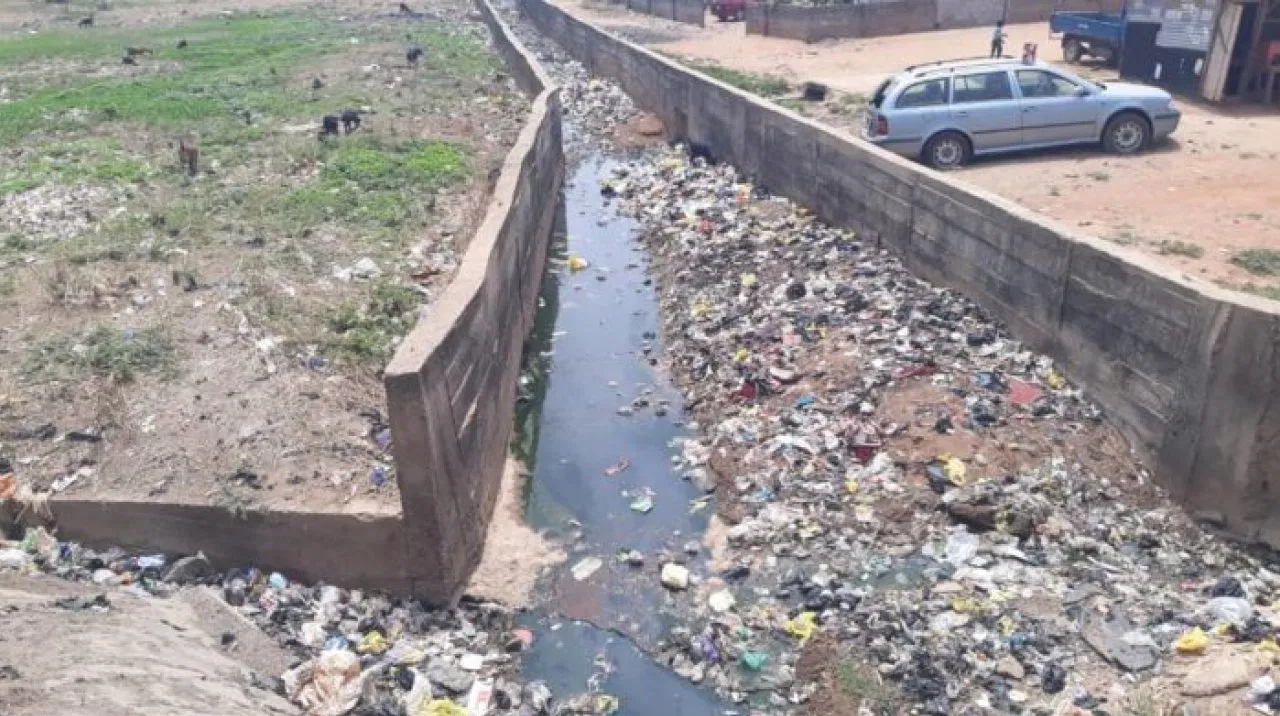
Drainage blockage is one of the primary causes of environmental pollution and flooding in the urban centres of Nigeria. This blockage is caused by a lot of factors ranging from improper disposal of wastes to ineffective drainage management practices. Until proper environmental sanitation measures are put in place, the issues of persistent environmental pollution and flooding may not disappear any time soon.

It is understood that flooding is quite a global problem due to climate change and other man made factors. But the will of the people to play their part is sacrosanct in ensuring a safe and healthy environment.

It is a fact that unlike fighting fire, flooding cannot be fought but perhaps, can be controlled or better still, prevented. Flooding is controlled by different methods including planting of vegetation, terracing hillsides to slow down the flow of water downhill, and construction of drainage channels.

In Nigeria, almost every urban road constructed is provided with drainage channels along its bank. These channels are meant to take care of the excess run off during rainfall and waste water from homes, markets and industries. In urban centres, minor “gutters” are interconnected to empty into wider channels or canal. These canals in turn carries storm and waste water to a river or ocean, as the case may be. Well, engineers design drainage channels utilizing the worst possible condition in order to cater to an extent for cases of unplanned or unforeseen occurrences of rainfall, other forms of precipitation and waste water for a period of time. This goes to imply that a large percentage if not all of the drainage channels built are efficient enough to cater for the flood control needs of an area for a given period of time. But when these channels are hindered by blockages, their efficiency based on initial design is greatly reduced.

How do we play our part as a community to ensure that man made factors (indiscriminate disposal of wastes) known to be capable of reducing the efficiency of the drainage thereby giving rise to flooding and environmental pollution is reduced to its barest minimum if not totally eliminated.

  1. Separation of wastes from point of generation

There is a need for waste separation. Biodegradable wastes and non biodegradable wastes should be separated at the points of generation; homes. If wastes are properly separated, then the first step to waste management has been set in motion. Bottles, polythene bags etc are non biodegradable and should be separated from food wastes. Also metal wastes.

  1. Recycling

There are certain used containers that are recyclable. If the wastes has already been separated, then the recyclable ones like most cans and bottles can be sent for recycling. There are hundreds of locals who make a living from buying recyclable waste materials for a token, help them stay in business; sell it!. It is clear that most of the wastes which cause drainage channel blockages are the non biodegradable ones.

  1. Periodic clearing of Drainage

This seems to be the most publicized public sanitation technique in Nigeria. Though this method appears good and beneficial but often times the debris cleared from the “gutters” are left lying on the streets. Soon after, feet and vehicle wheels trample these debris and eventually sends them back to the drainage. A case of “penny wise pound foolish”. Why are the gutters being cleared if there is no plan to move the contents to a dumpsite? However, I strongly believe it is the government’s duty to keep the environment safe for the populace, so as the communities come together to clear their drainage, government should be ready to provide a synergy so that the wastes are not left lying on the streets and further polluting the environment.

  1. Proper disposal of household generated waste

Wastes don’t get into drainage channels by mistake. The fact is, it is quite deliberate. People actually dump household generated wastes into gutters and canals. The reason is not far fetched. They believe when water flows through, it will drag the wastes away. But the question is, drag it to where?

They say “little drops make an ocean”. Little drop of waste along the canal by one person, two persons grows to become a gargantuan menace over time and this leads to blockage of canals.

We are hopeful of a time when the government will deploy viable and sustainable technology and other advanced methods in order to manage wastes and promote a healthy environment but until then; If we don’t take care of our environment, who will?

Climate change may appear to be over us, but environmental pollution will continue to live with us and endanger us until we stop contributing to it’s growth.

Your Business Value Chain

0

Everyone wants to make money.

Every business wants to bring in billions.

Every startup wants to become Facebook or Google or Amazon.

But these start-ups fail or close down few years after start. These businesses collapse or make meagre profit till the owner dies. They are missing out a lot of stuff but there is one major mistake all of them make.

If you’re starting a company or a business, it’s very important you note this so you would not end up in that same hole. I’ll give a short story to explain a point.

Eight months ago, I had a very crazy idea that I felt would generate millions of naira for me. The next thing was that I sprung into action and began to make plans on different ways on how I’d make money from the business. I was drawing up a profit structure without considering a lot of things. I wasn’t concerned about the value people would get from it. I was just concerned about how it would reach people, I was just concerned about how to make money.

Guess what? I got stuck. I got frustrated. I couldn’t see reasonable sources of profit. It went on for months and thank God I didn’t launch. So I had to dismantle all my plans and began to create a value system. Who are the people I’m reaching, what do they love, why do they love it, what can I do? How do I reach them? Would they want it this way? Would they want this or that? How would they react?

I was now more concerned about how my product would influence people. How it would be of benefit. When I talk about giving value, it could be products, ideas, information, time etc. As I continued to investigate and solve the glitches, I began to see lots of profit channels from it which was a hundred times more than my former structure. This is exactly what big companies like Amazon do. Amazon focused on customer satisfaction and then built a solid structure from it.

Most start-ups don’t have any product they’re offering and those who have products didn’t consider if the consumer wants them. They just want to make a profit. Those businesses would all crash. We’re in a very busy age and no consumer would spend time to buy what they’re not deriving satisfaction from either emotionally or physically or anyway. I have not yet launched my idea because I’m still working on the different values people can get or how they can get it but I’m quite sure it would be a success.

Note this: If Facebook was not able to solve or bridge the gap between social interactions all over the world, between different persons across countries, it would have failed.

If Amazon, Pepsi, and Coca-Cola did not focus on consumer satisfaction, they might as well have gone out of business.

All these are values and it is one similar key ingredient most start-ups leave out.

When building a profit system, be conscious of the value it’s giving. Your profit structure should bank on the value systems you put in place. Want to increase your profit structure? Then increase your value chain!