Good People, we made the LinkedIn News Editors’ Pick on the article on Apple and Tesla (see here – https://lnkd.in/eU3CTuj ). Yes, Apple might have bought 100 companies in the last few years, but it missed a really amazing one when it passed buying Tesla at about $20 billion, despite having piles of cash in its treasury! Today, Tesla is worth more than $650 billion! In a world of perception demand, sometimes, the most critical element is not really what the financial ratios show but what the perception of the future tells us.
The interesting thing is that all products that succeed at the level of perception are usually disruptive in their sector or industry. Google search cannot be considered to fall in the category of perception because many people already craved for better search because neither Microsoft nor Yahoo was offering a good one. So a product could be disruptive and yet not a percepting product. However, all percepting products are disruptive.
Building and analyzing companies based on their financials will miss leverageable factors which the future could unlock, and which no current financial model can pick. That is why even though Tesla does not sell up to 5% of cars which Toyota sells (sold about 9.5 million last year), the markets believe that Tesla is worth more – and a better company!
The governor of the Central Bank of Nigeria (CBN) in this video shared his views on cryptocurrency and Bitcoin. Clearly, his view is extremely pessimistic. Yet, it is a good thing that the governor is speaking, as that will help that debate the central bank and Securities & Exchange Commission (SEC) have promised for the fledgling sector.
Following the events of past weeks involving Facebook and the Australian government, the social media company has announced a plan to invest $1 billion in support of the news industry for the next three years.
Google was the first to take the step with itsNews Showcase initiative, now Facebook is following the step to prevent possible re-occurrence of events that took place in Australia.
Last week,Facebook blocked news services in Australia as its disagreement with the Australian government, over proposed legislation that will compel tech companies to pay news publishers for their contents, escalated. Facebook’s decision to cut off news services in Australia received heavy backlash and was quicklyrescinded after the government amended the legislation.
The proposed legislation which has now been signed into law means Facebook and Google will have to bargain with newsrooms either individually or collectively – and to enter arbitration if the parties can’t reach an agreement within three months, according to the Australian Competition and Consumer Commission.
With the amendments which gave Facebook the chance at fair negotiations with publishers, the social media platform said they look forward to agreeing to new deals with publishers and enabling Australians to share news links once again.
On Wednesday, Facebook announced it is embarking on an alternative approach to settle the ‘pay for news’ conflict.
“Facebook is more than willing to partner with the news publishers. We absolutely recognize quality journalism is at the heart of how open societies function – informing and empowering citizens and holding the powerful to account. That’s why we’ve invested $600 million since 2018 to support the news industry, and plan at least $1 billion more over the next three years,” Facebook said in ablog post.
Google has used its News Showcase, a $1 billion initiative aimed at compensating news outlets, to curtail the increasing calls for the tech giants to pay publishers for their news content.
In 2019, the European Union signed copyright laws that will require search engines and social media platforms to share revenue with publishers if their contents are displayed. EU members have a June 7 deadline to implement the law. France, which like many other countries in Europe has been sympathetic to publishers, swiftly implemented the copyright law. In January,Google signed a deal with French publishers under its News Showcase initiative.
Other EU member states are expected to implement the copyright law before the June 7 deadline.
Google and Facebook have been at the center of the ‘pay for news’ conflict, given that the duo control the largest share of online advertising. More countries have been joining the campaign to get the tech giants to compensate media outlets. Last week,Canada announced it is following Australia’s steps by enacting a law that will compel Facebook and Google to pay news publishers. Britain is also towing the same path.
Microsoft said on Monday it would team up with media industry groups like the European Publishers Council (EPC) to lobby for similar policy in Europe. The move has been heartily welcomed by the EPC, further stoking the growing emotion luring many countries to the campaign.
The moves indicate that Facebook will have more countries to fight if it doesn’t find a workable solution to the conflict, so the Silicon Valley platform adopted Google’s approach. The web search giant struck a deal with many Australian media outlets under the News Showcase to calm the nerve of the government. It has also used the initiative to strike deals with more than 500 news outlets around the world.
Last month, Facebook announced that it has signed deals with The Guardian, Telegraph Media Group, Sky News and some local, regional and lifestyle publishers, to pay for content in its Facebook News product in the UK. Facebook News product is a new tab where users can find headlines and stories next to news personalized to users’ interest. The company said it has also reached a deal with publishers in the US, and is in active negotiations with others in Germany and France.
In my 2019 convocation lecture in FUTO (Federal University of Technology, Owerri Nigeria), I spoke on economic opportunities in Nigeria – and The Umunneoma Economics. (Umunneoma means “good brethren” in Igbo). In my postulation, I explained how that economic philosophy is the pillar that drives the Igbo Apprenticeship System. Thenew global capitalist manifesto which is working to go beyond fixated focus on shareholders, to consider ALL stakeholders, is something the Umunneoma Economics is doing already.
The core tenet of theIgbo Apprenticeship System could be likened to the U.S. Federal Reserve which largely works to keep the U.S. dollars stable (by reducing inflation) and maximize employment through interest rates. So, the Reserve has defined main focus areas even though it can use its systems to do other things. Consequently, the U.S. Congress uses those two main factors to ascertain the effectiveness of the Reserve policy. The Umunneoma Economics solves unemployment in communities even as it strengths communities.
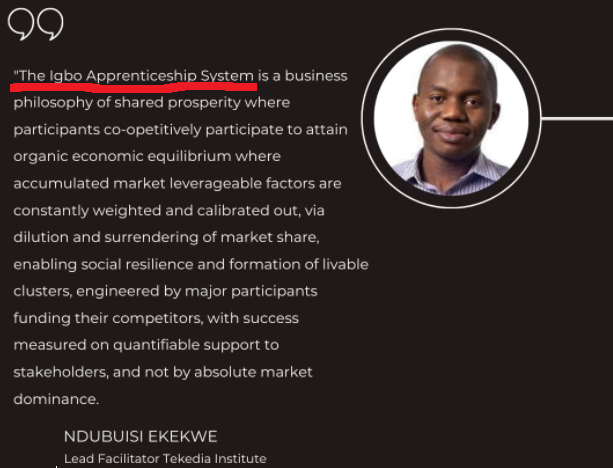
The Igbo Apprenticeship System is a business philosophy of shared prosperity where participants co-opetitively participate to attain organic economic equilibrium where accumulated market leverageable factors are constantly weighted and calibrated out, via dilution and surrendering of market share, enabling social resilience and formation of livable clusters, engineered by major participants funding their competitors, with success measured on quantifiable support to stakeholders, and not by absolute market dominance.
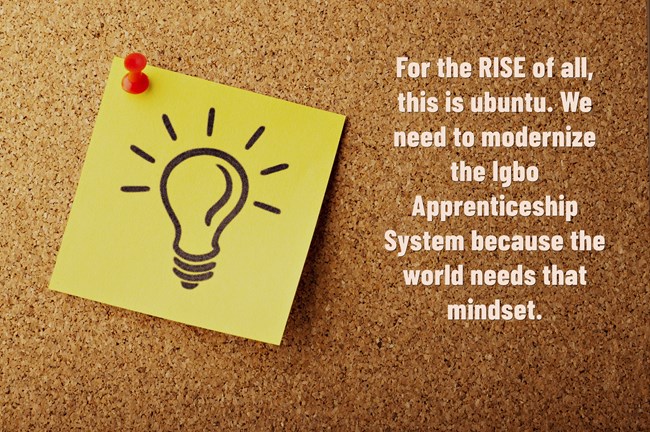
For the Igbo Apprenticeship System, the main focus is to prevent poverty by mass-scaling opportunities for everyone, and not for building conglomerates! It makes no sense in Adam Smith Economics that a man will build a business, accumulate a market share, and one day decides to relinquish some – and even go further by funding his competitors. But he is accomplished by doing so: those competitors are his brethren (umunneoma) and they will RISE with him. In a world of inequality, despite the obvious inefficiency in this system – lack of scale reduces the capacity to solve big problems – it is all about ubuntu.
There are great lessons from African tradition: “Onye aghana nwanne ya”- do not leave your brethren behind. Like I tell people, it would be nearly impossible to have extremely rich Igbo traders because they win by funding competitors and dividing their market shares through the Igbo apprenticeship system. How can a man give his customers to his brethren just to ensure he does not close his shop and move to the village?
In this time of winner-takes-all, the world needs the spirit of Umunneoma Economics and the framework of an institutionalized and modernized Igbo Apprenticeship System (IAS). A vision to have that conglomerate is possible if all the members of the IAS can feed into an entity which all of them will co-own as a cooperative.
You can all make shoes but a major shoe brand with an international focus will buy shoes from the members, making sure that each member becomes a “supplier” to the brand. That brand entity will have scale and capacity to compete and win at the global arena. Yes, at the downstream, members can continue to do business on their ubuntu mindsets, but this unified brand can scale and move upstream, and attain a global status.
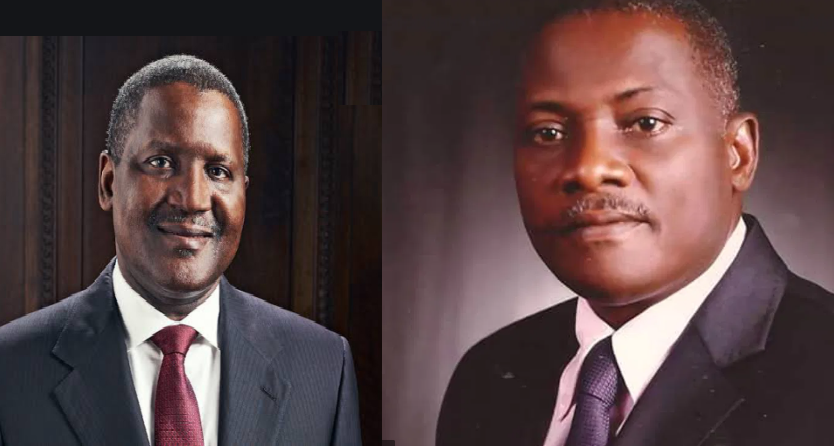
Being successful in Nigeria is not an easy feat to achieve. So many factors are involved. Most people believe formal education is the only way one can attain success but that is not always the case. If you decide to measure success through educational achievements alone, you might want to know that industrialists like Innocent Chukwuma (Innoson) stopped at secondary school. Maybe, when you want to refer to academic success you can then use people’s educational attainment as the yardstick for measuring success. But remember, many Ph.D. holders do not know what to do with their certificates.
Furthermore, it will be out of place to determine success based on financial achievement. Success, in the context of this essay, refers to one’s ability to reach the peak of his endeavour. Endeavour here could be anything. For instance, some people wish to be their possible best in medicine. Some want to become exceptionally good at playing football, scrabble, chess, or any other games. Some may wish their businesses to thrive. And there are those that wish to reach the top position in their offices. All these are examples of success. Hence, people become successful if they achieve their aims.
As mentioned earlier, for a person to become successful, he must have some characteristics that set him apart from others. They do ordinary things in extraordinary ways. One interesting thing about these people is that they all exhibit the same behaviour. All of them, irrespective of age, gender, race, or religion, have the right qualities that pushed them up.
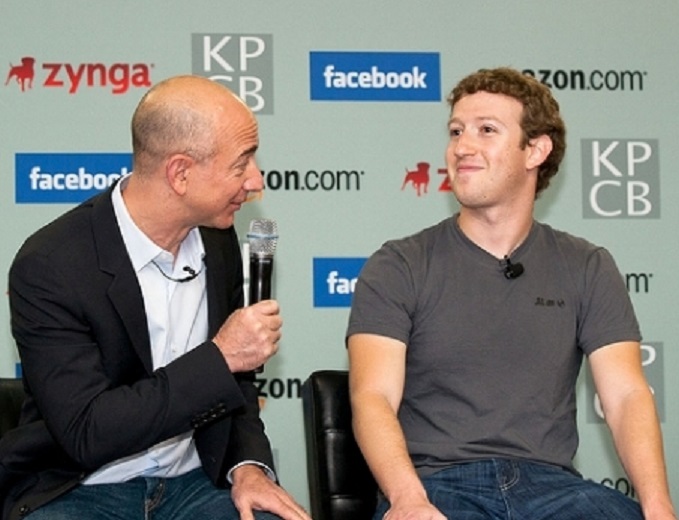
Founders of Facebook and Amazon
Characteristics of Successful People
Based on observation, the following are the characteristics of successful people:
a. Ambitious: The desire to reach higher peaks is one factor that drives these people. A person that is not ambitious cannot push through hurdles that might stand in the way to success. Apart from that, non-ambitious people easily get contented and so find no reasons to “stress” themselves with climbing the next rung. However, the ambitious never settle; their success is their motivation for the next move.
b. Constant Learning: These people never stop learning. They are aware that they don’t know it all and so are willing to learn more. They don’t undermine people’s ideas because they believe knowledge and information can come from anywhere. These people are the reason knowledge is said to hold power.
c. Risk Taking: The people that fear taking risks might find it hard to grow. Like people say, if something becomes easy to accomplish, it will become children’s plaything. This means that if a task is easy to accomplish, it will become flooded. Hence, only those that can take risks can push into unfamiliar grounds and conquer. This quality has been exhibited by all the successful people I know. In fact, those risks they took gave them their biggest breaks. Nevertheless, their risks were well-planned out; they went for things they could control if they achieve them.
d. Building Great Network: This is one major tool for anyone that wishes to reach the peak. Based on my observation, nobody has been able to get to that peak alone; someone must have pulled them up. Note the word “pull”, which is not “push”. This means that people below you can push you up but their help is limited. However, only those up there can help you to the peak. Hence, make the right connections as you move and never feel guilty or ashamed to use them.
e. Grabbing Opportunities: Abilities to identify an opportunity when it walks-by is a skill possessed by these people. Sometimes their opportunities come accidentally; other times they come fully prepared. Like many people, they have also grabbed wrong opportunities at one time or the other but, unlike many others, they do not settle with them. This is to say that if what you hold doesn’t give you what you desired, drop it and seek for another. But keep vigilant because opportunity hardly looks the way it is expected.
f. Moving from Known to the Unknown: Most successful people started their pursuit from the areas they are familiar with. It is after they have settled that they began to plunge into new territories to test the waters. If their adventure does not favour them, they move back to their known territory and continue operating from there until they gain enough grounds to take another leap. Also, these men and women begin their journeys from the simple to the complex. They may not start small, but they don’t always start big and multifaceted. They take their baby steps and gradually grow until their feet are deeply planted. It is only then they begin to take those leaps that land them their big breaks.
In summary, for you to get to that peak, remember to imbibe the following: never settle for less; keep improving on yourself; study what you are plunging into; take chances; make friends wherever you go; and begin with what you know.