DD
MM
YYYY

PAGES

DD
MM
YYYY

spot_img

PAGES

Home Blog Page 40

U.S. Appeals Court Hands President Trump Unilateral Power to Fire Labor and Employment Board Officials

0

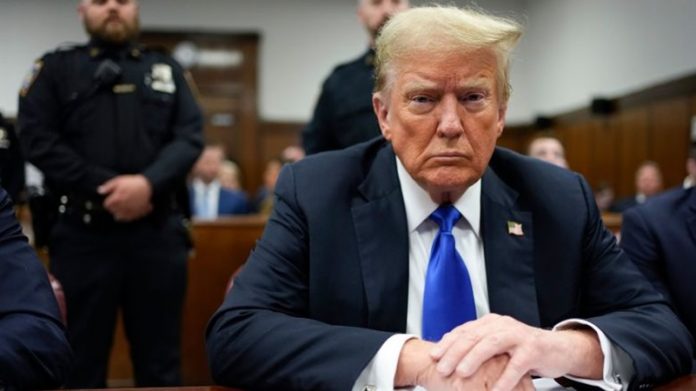
In a landmark decision that significantly expands the scope of presidential authority, a federal appeals court ruled Friday that President Donald Trump may remove members of the National Labor Relations Board (NLRB) and the Merit Systems Protection Board (MSPB) at will, without requiring cause.

The 2-1 decision from a panel of the U.S. Court of Appeals for the D.C. Circuit reverses lower-court rulings that had blocked Trump’s attempts to fire members of the key labor and employment panels, including Biden appointees like NLRB member Gwynne Wilcox and MSPB Chair Cathy Harris. The ruling is a major victory for the administration’s long-standing effort to challenge the independence of federal agencies and consolidate executive power.

The Constitutionality of “For-Cause” Removal

The majority opinion, penned by Trump appointees Judges Gregory Katsas and Justin Walker, rests on the principle that the President must have the power to remove executive officers who wield substantial executive power on his behalf.

The judges cited the Supreme Court’s 2020 ruling, Seila Law LLC v. Consumer Financial Protection Bureau, which stated, “Congress may not restrict the President’s ability to remove principal officers who wield substantial executive power.” In that case, the Court found the single director of the CFPB lacked constitutional protection from at-will removal.

The majority determined that the NLRB (which adjudicates private-sector labor disputes and influences federal labor law) and the MSPB (which handles complaints from federal workers with civil service protections) “wield substantial powers that are both executive in nature” and are fundamentally “different from the powers” that were historically deemed independent.

Crucially, the ruling argues that the 90-year-old precedent set by Humphrey’s Executor v. United States—which has long protected the heads of certain independent agencies from unilateral removal—does not apply to the NLRB and MSPB. That 1935 case had carved out an exception for agencies that performed merely “quasi-legislative” or “quasi-judicial” functions.

“So, Congress cannot restrict the President’s ability to remove NLRB or MSPB members,” the majority concluded.

A Warning of Executive Overreach

The decision drew a strongly worded dissent from the third judge on the appellate panel, Biden appointee Florence Pan, who warned that the ruling dramatically increases the President’s authority and threatens the foundation of the administrative state.

“Today, my colleagues make us the first court to strike down the independence of a traditional multimember expert agency,” Pan wrote.

She cautioned that the majority’s reasoning essentially “redefine[s] the type of executive power that must be placed under the exclusive command of the President, and effectively grant him dominion over approximately thirty-three previously independent agencies.” Pan further warned that the determination that the MSPB, which is largely adjudicatory, cannot be independent, “suggests that no agencies can be independent.”

Broad Implications Across Government

The ruling is part of a broader legal effort by the administration to chip away at removal protections for independent agency heads.

The Supreme Court is already set to hear oral arguments on Monday in the case of Trump v. Slaughter, which could determine whether the Federal Trade Commission (FTC)—the very agency at the center of the Humphrey’s Executor precedent—is likewise subject to at-will removal, potentially overturning the landmark 1935 ruling altogether.

The D.C. Circuit majority explicitly noted that its opinion does “not address whether Congress may restrict the President’s ability to remove members of the Board of Governors of the Federal Reserve System.” However, the ruling highlights the ongoing legal battle over the central bank, as the administration is currently challenging the tenure of Fed Governor Lisa Cook, a Biden nominee, while pressuring the Fed to slash U.S. interest rates. The Supreme Court is set to hear oral arguments in Cook’s case on January 21.

The D.C. Circuit’s decision clears the way for the administration to install its own appointees and fundamentally reshape the policy direction of the NLRB and MSPB. The ultimate breadth of the President’s removal power now hinges on the highly anticipated decisions from the Supreme Court.
Kenya Sells $1.6bn Safaricom Stake, Hands Vodacom Control as Ruto Hunts Cash to Ease Fiscal Strain

0

Kenya is selling a 15 percent stake in Safaricom to South Africa’s Vodacom in a deal valued at about $1.6 billion, marking one of the country’s biggest-ever divestments as President William Ruto’s government turns to asset sales to stabilize public finances.

Finance Minister John Mbadi confirmed the agreement on Thursday, saying the proceeds will serve as seed capital for Nairobi’s new national infrastructure fund and its sovereign wealth fund. To get there, the government will shrink its Safaricom ownership from 35 percent to 20 percent.

Ruto’s economic team is working within narrow margins. Public debt is high, revenue generation has slowed, and annual obligations are swallowing nearly 40 percent of government earnings. With this squeeze, the administration has little room to raise more taxes and has shifted its playbook toward selling stakes in major state-linked companies to plug upcoming funding needs.

Safaricom is the biggest jewel in that basket. It is Kenya’s largest company by market capitalization and anchors daily trading on the Nairobi Securities Exchange. Its mobile money service, M-Pesa, underpins the country’s digital economy and has grown into one of the most influential financial products on the continent.

Vodacom, which already owns 39.9 percent of Safaricom through the Vodafone Kenya holding structure shared with parent company Vodafone, will pay 34 shillings a share, a 23.6 percent premium on the six-month weighted average. That valuation sets up a deal that analysts say is priced for control, a point underscored by Standard Investment Bank’s Eric Musau, who described it as a clear control premium.

Once completed, Vodacom’s stake will sit at 55 percent, giving the South African firm effective command of the telecom giant for the first time. Mbadi stressed that Vodacom will be required to keep Safaricom’s workforce, preserve its identity, and maintain its branding.

The government says the move is strategic and will allow it to recycle capital into assets that can generate long-term returns. Mbadi explained at the briefing that it is simply converting one asset into another, with plans to channel future returns into investments in roads, irrigation systems, energy plants, and upgrades to the main airport. The country is also preparing to sell shares in Kenya Pipeline Company in a public offering next year as part of its broader divestment programme.

Safaricom’s shares jumped more than 4 percent after the announcement to 29.25 shillings, while Vodacom slipped more than 2 percent in Johannesburg trading. Some analysts said the price pop reflected investor relief that the Kenyan state will still hold a sizeable, though smaller, position while freeing space for a deeper commercial partner.

The deal also reshapes the regional telecom map. Vodacom already operates in Tanzania, the Democratic Republic of the Congo, and other markets, and gaining control of Safaricom strengthens its presence in eastern Africa.

One of the biggest draws is Ethiopia, where Safaricom launched services in 2022 after winning a licence to challenge the state-run Ethio Telecom. Ethiopia has more than 120 million people and is seen as one of Africa’s most promising digital frontiers. Vodacom’s increased stake gives it more influence over how Safaricom deploys capital there, especially as competition heats up and the Ethiopian government continues to open the telecom space gradually.

The financial structure of the deal also offers Nairobi an immediate boost. Alongside the equity sale, Vodacom will pay 40.2 billion shillings upfront for the rights to future dividends on the state’s remaining shares. That lump sum provides the government with fresh cash even before any divestment proceeds flow into the new funds. The transaction still needs approval from regulators and parliament.

Kenya’s decision to part with part of its most profitable company is a sign of how tight its fiscal environment has become. Rising global borrowing costs, limited access to cheap credit, and a string of heavy external redemptions have forced the administration to rethink how it manages major state assets. Safaricom’s steady earnings and dominant market position made it an obvious candidate to attract interest from a buyer with deep pockets. LSEG data shows its shares are widely held by offshore funds, including Norges Bank, HSBC, and Mobius-linked investors.

Vodacom has signaled that it does not plan to launch a full takeover once the acquisition is complete and will ask regulators for exemptions that would allow it to stop short of a mandatory offer. That stance is intended to calm concerns about market concentration, though the company’s new control level will draw close scrutiny from authorities. The government, now reduced to a 20 percent owner, says that stake still gives it sway over the strategic direction of the firm.

The move also sets a precedent for how Kenya might handle similar companies in the future. With public finances strained and external conditions still unfriendly, the administration’s room to manoeuvre is shrinking. Safaricom’s value, stability, and continental reach made it the easiest place to start the asset-sale cycle.

Netflix Set To Buy Warner Bros Discovery for $72bn, Sets Up a Historic Hollywood Showdown

0

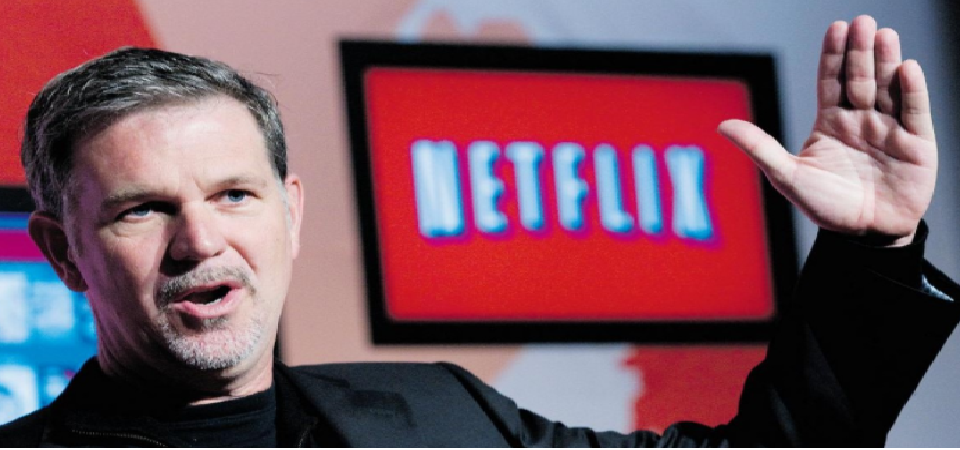
Netflix has agreed to buy Warner Bros Discovery’s television, film studios, and streaming division for $72 billion, a deal that would place one of Hollywood’s oldest entertainment empires under the control of a company that built its global dominance by disrupting the very idea of a traditional studio.

The agreement caps a fierce, weeks-long bidding war and marks a defining moment for Netflix, which spent more than a decade insisting it preferred building new franchises from scratch rather than acquiring legacy players. Now, the streaming giant is positioned to become a combined producer, distributor, and rights-holder on a scale the industry has never seen.

“This is a rare opportunity that’s going to help us achieve our mission to entertain the world and bring people together through great stories,” Netflix co-CEO Ted Sarandos said in a call with investors. “I understand that some of you are surprised… we have been known as builders, not buyers.”

Warner Bros Discovery shareholders will receive $23.25 in cash and about $4.50 in Netflix stock per share, valuing the company at $27.75 per share — roughly $72 billion in equity and $82.7 billion including debt. It represents a premium of over 121% relative to Warner Bros Discovery’s closing price on September 10, prior to reports of a potential sale.

The deal is expected to close after Warner Bros Discovery completes the spinoff of its global networks unit — Discovery Global — which is scheduled for the third quarter of 2026. Netflix has offered a $5.8 billion breakup fee, while Warner Bros Discovery would pay $2.8 billion if the deal fails.

Netflix shares dipped around 0.2% after the announcement. Warner Bros Discovery stock rose 3.2% to $25.33. Paramount fell 6.1%.

A Bidding War Fueled by Politics and Power

Netflix beat two major competitors: Paramount, Skydance, and Comcast. Paramount had launched an aggressive series of unsolicited offers for the entire Warner Bros Discovery business, including cable networks that Warner plans to spin off. CNBC reported that Paramount’s final bid, submitted Thursday evening, was $30 per share in cash.

Comcast also submitted an offer for the film and streaming assets.

The involvement of Paramount Skydance’s chairman, David Ellison, added a sharp political layer. The New York Post reported that Ellison met with officials in the Trump administration and key lawmakers in Washington to present his case against Netflix acquiring Warner Bros Discovery. His father, Oracle co-founder Larry Ellison, is close to President Donald Trump, adding further intrigue to the competitive scramble.

Paramount also sent a letter to Warner Bros Discovery’s lawyers, warning that a sale to Netflix would likely “never close” because of regulatory scrutiny in the United States and overseas. The Wall Street Journal reported that Paramount’s legal team wrote that the acquisition “will entrench and extend Netflix’s global dominance in a manner not allowed by domestic or foreign competition laws.”

The acquisition hands Netflix an extraordinary library: Warner Bros’ century-long catalogue, HBO’s prestige slate, and DC’s universe of superheroes. It includes franchises such as Harry Potter, Game of Thrones, and DC icons like Superman and Batman.

Sarandos, who once said “the goal is to become HBO faster than HBO can become us,” now finds himself at the helm of HBO’s future.

The deal moves Netflix from disruptor to establishment player, placing it at the center of Hollywood’s historical lineage. Warner Bros, founded in 1923, shaped modern film and television through eras ranging from the Golden Age of cinema to the rise of cable and the birth of prestige series.

Now, after a decade of streaming turmoil, Netflix is stepping into the driver’s seat of a studio that helped define Hollywood itself.

Mounting Regulatory Pressure

Regulatory pushback is expected to be fierce.

“It will raise eyebrows and concerns,” said PP Foresight analyst Paolo Pescatore. “The combined dominant streaming player will be heavily scrutinized.”

Sen. Elizabeth Warren said the proposed merger “looks like an anti-monopoly nightmare,” warning it could lead to higher streaming prices and fewer consumer choices.

“A Netflix-Warner Bros would create one massive media giant with control of close to half of the streaming market,” Warren said. She added that the antitrust process under President Donald Trump has become “a cesspool of political favoritism and corruption” and called for strict enforcement by the Department of Justice.

A senior Trump administration official told CNBC that the White House views the deal with “heavy skepticism.” Trump himself has a long history of challenging large media mergers. Before taking office in 2017, he opposed AT&T’s purchase of Time Warner, calling it too much concentration of power. The Department of Justice attempted to block the deal in late 2017 and lost the case, allowing it to close in June 2018.

Trump also intervened in the U.S. Steel–Nippon Steel deal before the 2024 election, initially opposing it, then approving it after returning to the White House in 2025, following a national security agreement that granted the government a “golden share.”

That record sets the stage for an intense review of the Netflix-Warner Bros Discovery merger.

Resistance is already emerging from parts of Hollywood.

Tom Harrington, head of television at Enders Analysis, said, “There will be resistance from parts of Hollywood and various unions. HBO, the creative jewel, would be terribly exposed within Netflix.”

Cinema United, a global exhibition association, said the deal could pose an “unprecedented threat” to movie theaters worldwide.

Former WarnerMedia CEO Jason Kilar said he could not think of “a more effective way to reduce competition in Hollywood” than selling Warner Bros Discovery to Netflix.

Netflix has tried to ease those fears, telling Warner Bros Discovery that it would continue theatrical releases for the studio’s films. The company said the acquisition would expand job opportunities, boost production in the United States, and increase long-term investment in original programming.

Netflix co-CEO Greg Peters said the company could introduce HBO Max through bundles or other packaging options and pointed to Netflix’s history of elevating outside shows like Breaking Bad and Suits.

A Company Hunting for Its Next Growth Engine

The acquisition comes as Netflix faces questions about the pace of its expansion. After soaring more than 80% in 2024, its stock has risen only 16% this year. The company stopped reporting subscriber counts earlier in 2025, causing analysts to wonder about slowing growth.

Netflix has been counting on:

• The password-sharing crackdown that drove its 2024 revenue surge
• An ad-supported tier that is still not a major revenue driver
• A gaming business that has struggled with shifting strategy and leadership changes

Buying Warner Bros Discovery would instantly strengthen its gaming ambitions. Warner’s game division produced hits like Hogwarts Legacy, which has generated more than $1 billion.

Netflix estimates the deal could yield $2 billion to $3 billion in yearly cost savings by its third year.

The acquisition is a turning point for both companies and for the broader entertainment landscape.

Warner Bros Discovery has cycled through transformative mergers over the past two decades: Time Warner’s sale to AT&T, the subsequent WarnerMedia spinoff, and the merger with Discovery. Now, Netflix is poised to absorb its most valuable properties.

Netflix spent years reimagining Hollywood from the outside. Now it is attempting to shape the inside by taking over a studio that helped define American entertainment from the black-and-white era to prestige television to today’s global streaming battles.

Amazon Pays €180m and Scraps Algorithmic Monitoring to Settle Landmark Italian Tax and Labor Probe

0

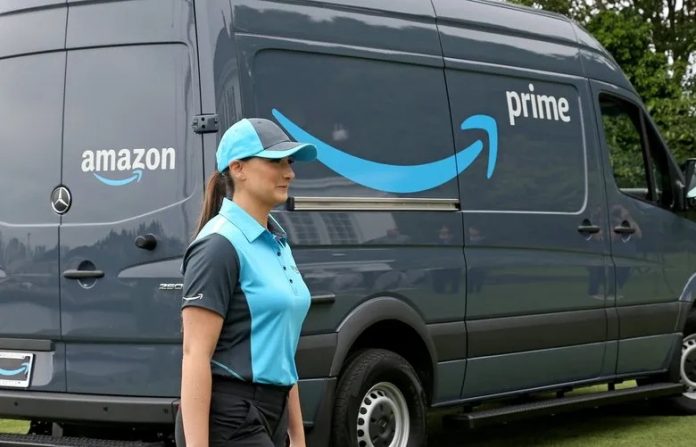
An Italian unit of e-commerce giant Amazon has agreed to a massive financial settlement of approximately €180 million ($210 million) with the Italian tax agency, and, critically, has scrapped its proprietary monitoring system for delivery staff.

This decisive move ends a high-profile probe into alleged tax fraud and illegal labor practices, according to sources familiar with the matter on Friday.

The settlement resolves a nearly two-year investigation launched by Milan prosecutors in July 2024. The probe focused on Amazon’s logistics services unit, which was accused of systematically circumventing labor and tax laws by using layers of intermediary companies—specifically cooperatives or limited liability companies—to supply workers.

This complex structure allegedly masked the true employment relationship, allowing the e-commerce giant to avoid Value Added Tax (VAT) payments and significantly reduce social security contributions across its vast delivery network. The scale of the alleged violation was underscored when Milan prosecutors initially seized €121 million from the unit upon opening the investigation.

The Breakdown of the Labor Scheme

The central charge revolved around a form of “digital gangmastering,” where Amazon’s logistics unit was accused of maintaining “directive powers” over the workers supplied by the intermediary firms.

Prosecutors argued that Amazon’s proprietary management software and algorithms effectively organized the entire distribution and last-mile delivery of goods, determining working hours, measuring performance, and even exercising disciplinary authority, despite the workers being formally employed by external entities.

This system, known in Italy as a fictitious contract scheme, allowed the primary logistics operator to access “cheap labor” without incurring the real costs associated with direct employment, generating significant losses for the state budget while minimizing operational costs for Amazon.

As part of the resolution, Amazon not only paid the compensation but also agreed to scrap the controversial monitoring system that critics say pushed drivers to unsafe performance levels. This addresses one of the key labor practice complaints often levied against the tech giant globally.

Broader Industry Crackdown

Amazon’s compensation payment is not an isolated incident but rather a major part of a sweeping Italian crackdown on illicit labor and tax practices within the logistics sector. The Milan prosecutors’ office has, over the past two years, successfully reached settlements with more than 30 companies, collecting over €1 billion in total.

The investigation has also targeted the Italian units of major global delivery rivals, including DHL, FedEx, and UPS, as well as large domestic businesses like the supermarket chain Esselunga. The recurring theme across all these probes is the use of shell companies and labor pools to conceal actual employment relationships and evade mandated contributions.

In a statement, Amazon said the resolution would lead to improved standards: “We have clarified our position with the relevant authorities, who have recognized the high standards of our collaboration model with delivery partners,” the company said, adding that its engagement with Italian institutions “has improved compliance across the entire industry.”

Elon Musk’s X Fined €120m by European Union — What It Means for Social Media, Regulation and U.S.–EU Tech Tensions

0

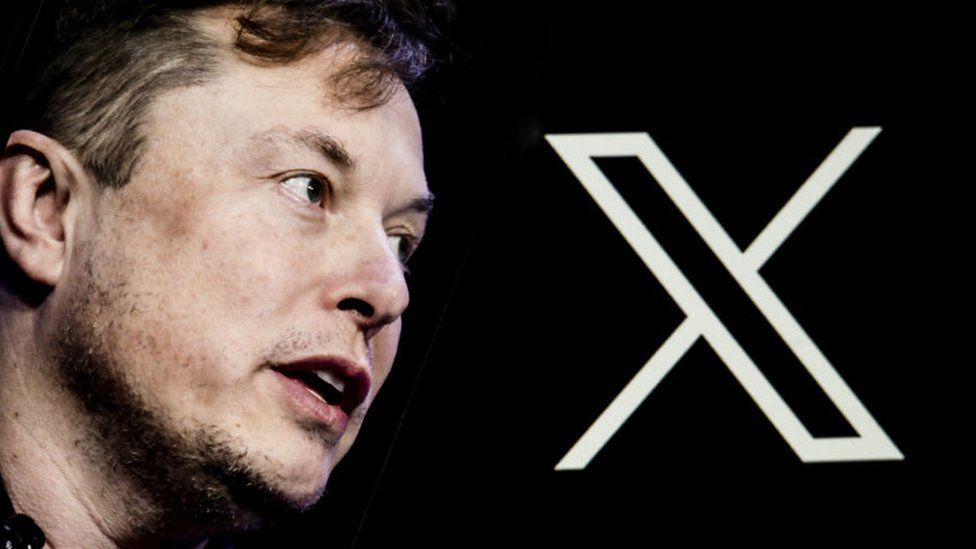
The European Commission slapped a €120 million fine on X (formerly Twitter) on Friday, marking the first enforcement of the bloc’s landmark Digital Services Act (DSA) against a major social-media platform.

The ruling grounds its decision on multiple breaches: X’s paid “blue checkmark” system was deemed a deceptive design, the company failed to maintain a transparent advertising repository, and it denied researchers adequate access to public data.

Under the DSA, large online platforms are required to provide public clarity over who is verified, how adverts are placed and paid for, and to give outside researchers access to public-facing data when needed. The Commission concluded that allowing any user to pay for a “verified” badge — without meaningful identity verification — misleads users, undermines trust, and opens the door to impersonation, scams, and misinformation.

Beyond the blue ticks, regulators took issue with X’s advertising records: the platform’s ad-database lacked basic transparency about content, paying entities, and targeting criteria, and imposed excessive delays — flaws the Commission says hinder independent scrutiny and raise risks of manipulation. Meanwhile, X placed “unnecessary barriers” on data access for independent researchers, undermining the DSA’s goal of enabling scrutiny of systemic risks across online platforms.

In the fine breakdown, the Commission attributed roughly €45 million to the blue-tick violation, €40 million to data-access shortcomings, and €35 million to deficiencies in the ad repository. The total, although revealed, remains far below the DSA’s maximum, which could reach 6 percent of a platform’s global turnover.

Why This Matters: Regulation, Reputation, and Revenue

For X, the fine threatens far more than a financial hit. It puts the platform’s entire business model under strain. The “subscribe-to-verify” scheme that rebranded the blue checkmark was meant to be a major new revenue stream following the platform’s acquisition by Elon Musk. But EU regulators now view it as a misleading “design pattern,” not a legitimate authentication method.

That blow strikes at the heart of how X has tried to monetize paid users quickly, raising serious long-term questions about the viability of paid-verification as a global strategy.

Moreover, the DSA mandate around ad transparency and data access is a block against many of the monetization and algorithmic strategies that modern social platforms exploit. By finding X non-compliant on these fronts, Brussels is sending a clear signal that revenue generation and regulatory compliance cannot be decoupled, especially in large markets like Europe.

Against that backdrop, markets and investors are likely to scrutinize whether X can restructure its user-verification model, rebuild trust, and remain competitive — not only in Europe, but globally. For Musk and his team, this may involve heavier compliance costs, rethinking user onboarding, and potentially sacrificing some monetization levers to meet regulatory demands.

Geopolitics, Free Speech and the U.S.–EU Showdown

The fine didn’t land in a vacuum. Within hours of the announcement, prominent U.S. politicians denounced the penalty, accusing the EU Commissioner of using the DSA to target American tech firms under the guise of regulation.

Some in Washington and among X’s supporters cast the ruling as a crackdown on freedom of expression and an overreach by Brussels. From Brussels’ perspective, however, the decision is less about censorship than about ensuring transparency, consumer protection, and accountability around digital platforms — especially ones wielding vast influence over public discourse.

“Rumors swirling that the EU commission will fine X hundreds of millions of dollars for not engaging in censorship. The EU should be supporting free speech, not attacking American companies over garbage,” U.S. Vice President JD Vance wrote on Thursday.

That tension between regulatory oversight and concerns of political freedom underscores the deeper fault lines emerging in tech geopolitics.

“The European Commission’s $140 million fine isn’t just an attack on @X, it’s an attack on all American tech platforms and the American people by foreign governments,” U.S. Sec of State Marco Rubio said, adding that the days of censoring Americans online are over.

As the U.S. pushes for a more open global tech ecosystem, and Europe doubles down on stricter rules to guard against misinformation, scams, and opaque platform practices, companies like X could find themselves caught between competing legal and political frameworks.

What Comes Next — And What Could Happen If X Doesn’t Comply?

The Commission has given X a limited window to propose corrective measures and comply with DSA rules. The platform has 60 days to outline its plan for restructuring the verification system and 90 days to reform ad transparency and data access policies before further penalties are triggered.

If X fails to comply, higher fines — up to 6 percent of global revenue — could follow. The ruling also opens the door to additional investigations under the DSA, including scrutiny of algorithmic content promotion, misinformation controls, and how the platform handles user complaints or prohibited content.

For now, regulators seem focused on transparency offenses rather than directly policing content moderation or freedom of expression — but the decision nonetheless raises broader questions about how global social media platforms will adapt to competing regulatory regimes across jurisdictions.

In short, the EU’s fine against X marks a turning point. It is both a rebuke of the platform’s recent monetization approach and a test of whether Musk’s vision for an AI-powered, subscription-based social media network can survive under heavy regulatory pressure.