DD
MM
YYYY

PAGES

DD
MM
YYYY

spot_img

PAGES

Home Blog

China to Fully Cover Childbirth Costs as Deepening Demographic Decline Threatens Economy and Workforce

0

China has announced plans to expand its national healthcare insurance programme next year to fully cover all out-of-pocket medical expenses for childbirth, a significant policy shift aimed directly at reversing a long slide in fertility that threatens to undermine the country’s future workforce and economic growth.

Unveiled at a national healthcare security conference in Beijing, according to the state news agency Xinhua, the proposal — to eliminate delivery fees for parents and expand prenatal care coverage, including labor pain management — forms the centerpiece of a wider fertility support strategy aimed at reducing the financial burden of having children. Authorities said the move will be rolled out nationwide, building on pilots in seven provinces such as Jilin, Jiangsu, and Shandong, that have been experimenting with broader inpatient maternity expense reimbursement ahead of a full rollout.

The strategy also seeks to include gig economy workers, migrant laborers, and others often excluded from comprehensive social insurance nets.

China’s demographic challenge has deteriorated over the years. The United Nations Population Division projects China’s population will decline sharply over the coming decades, shrinking from around 1.4 billion today to approximately 633 million by the end of the century under its medium-variant scenario. That projection implies China could lose more than half its current population by 2100, an unprecedented scale of demographic contraction for a nation of its size.

Plunging birth rates have persisted even after Beijing relaxed its one-child policy, eventually permitting families to have three children and adopting various pro-natalist incentives. Yet fertility rates have continued to fall well below replacement level — the threshold (about 2.1 births per woman) needed to maintain a stable population without immigration — and China’s population began shrinking in the early 2020s. Official data shows deaths outnumbering births, and analysts warn the decline is now structural rather than temporary.

The consequences reach far beyond social statistics. An ageing and shrinking populace carries profound economic implications: fewer working-age people supporting a growing elderly cohort, rising pension and healthcare costs, and potential erosion in China’s manufacturing competitiveness as labor supply tightens. More than half of China’s population is projected to be 60 or older by the late century under some demographic scenarios, compounding fiscal and labor market pressures.

It is not China alone. Other major economies, particularly in East Asia and Europe, are experiencing similar population contractions. Japan’s population has been declining for years, with projections showing its populace continuing to shrink through 2100. Italy and several other European nations are also facing sustained negative population growth due to low fertility, attributed largely to economic downturn and limited immigration. According to United Nations data, dozens of countries will see population loss over the remainder of the century, intensifying global concerns about workforce sustainability and economic dynamism.

Such trends have even drawn commentary from business leaders, including Elon Musk, who has repeatedly warned that persistently low birth rates in advanced economies could pose a long-term threat to humanity’s future by shrinking the pool of working-age people and undermining societal resilience. Musk has suggested that without actions to raise fertility, some nations might see their populations dwindle dramatically, with grave implications for economic growth, innovation and global influence.

Demographers caution that fears of an absolute “extinction” of nations are exaggerated — global population is projected to peak mid-century and decline slowly thereafter — but the structural shifts underway are real. An aging population with fewer young people can strain social support systems and slow economic growth, even if the outright disappearance of a national population remains unlikely.

China’s latest healthcare pledge aligns with broader government commitments made earlier this year at the central economic work conference and in policy recommendations for the next five-year plan (2026–2030), which call for better maternity insurance, expanded childcare subsidies, tax incentives for families, and improved parental leave policies.

In parallel, the National Healthcare Security Administration reported a “special rectification campaign” to crack down on fraudulent claims, recovering approximately 120 billion yuan ($17 billion) over the past five years and bolstering the sustainability of the broader insurance system.

Taken together, the expanded coverage for childbirth and related services reflects Beijing’s recognition that reversing demographic decline requires more than exhortations to have children: it demands addressing fundamental economic barriers that make raising families prohibitively expensive for millions of households.

Although they signal a dramatic shift in social policy as China confronts one of the most profound population transitions in modern history, it remains uncertain whether these measures will meaningfully boost fertility.

Vanke’s Bond Vote Failure Rekindles Fears of a New Phase in China’s Property Crisis

0

China Vanke’s failure to secure bondholder approval to delay a looming bond payment has sharpened concerns that even state-backed developers are no longer insulated from the country’s deepening property slump, raising the risk of a high-profile default that could further damage investor confidence in the sector.

A filing, reported by Reuters, showed that Vanke did not win enough support from bondholders to extend by one year the repayment of a 2 billion yuan ($280 million) onshore bond due on Monday. The rejection followed a three-day vote that ended late on Friday and now leaves the developer with a grace period of five business days to make the payment in full. Approval of the proposal required backing from at least 90% of voting bondholders, a threshold that proved out of reach.

The proposal, which sought to postpone both principal and interest payments without offering additional credit support, was rejected after 76.7% of bondholders voted against it, according to the filing to the National Association of Financial Market Institutional Investors. Two alternative proposals for the same bond, which included credit enhancement measures, attracted more support, with one securing 83.4% approval, but still fell short of the required supermajority. Bloomberg News first reported the outcome on Saturday.

The setback underscores the severity of Vanke’s liquidity pressures and highlights the increasingly tough stance of creditors, even toward companies long viewed as safer bets because of state ties. Vanke is one of China’s most prominent developers, with projects across major cities, and is about 30% owned by state-owned Shenzhen Metro Group. That backing had previously led some analysts to believe the company would be shielded from the worst of the sector’s turmoil.

Instead, the failed vote suggests bondholders are no longer willing to grant time without stronger assurances, reflecting broader fatigue after years of broken promises and restructurings across the industry. Yao Yu, founder of credit research firm RatingDog, said Vanke may now seek to extend the grace period itself to 30 business days. If bondholders approve such a move, it could buy the developer time to negotiate and reach a compromise, but there is no guarantee that creditors will agree.

The latest episode revives memories of the property crisis that erupted in 2021, when tighter regulations triggered a liquidity crunch that toppled some of China’s biggest developers. Former industry giant China Evergrande was ordered to liquidate by a Hong Kong court and was delisted this year, while Country Garden and others have also fallen into distress. Those defaults shattered homebuyer confidence and sent shockwaves through a sector that once accounted for roughly a quarter of China’s gross domestic product.

Since then, weak demand, falling prices, and unfinished projects have continued to weigh on the market and on broader economic growth. A quarterly Reuters survey published this month showed China’s home prices are expected to fall 3.7% this year and continue declining next year before stabilizing only in 2027, underlining how prolonged the downturn has become.

Vanke’s troubles now risk adding a new layer of stress. The developer is also seeking to extend by one year the repayment of another yuan-denominated bond worth 3.7 billion yuan that is due on December 28, with a bondholder meeting scheduled for December 22. Failure to secure relief on that front would further strain its already thin liquidity buffer.

Market pricing reflects mounting anxiety. Vanke’s onshore notes are trading at deeply distressed levels of around 20 to 30 yuan per 100 yuan of face value, while its two offshore dollar bonds are hovering near 20 cents on the dollar. Ratings agency S&P Global downgraded Vanke on November 28, warning that its financial commitments were unsustainable given weak liquidity and that the company was “vulnerable to risks of nonpayment or distressed restructuring.”

The potential consequences extend beyond one developer. With interest-bearing liabilities of about 364.3 billion yuan ($52 billion), any debt restructuring at Vanke would be among the largest of the decade, potentially eclipsing those of privately owned peers such as Evergrande and Country Garden. Reuters reported last month that state-owned China International Capital Corporation had been brought in to assess Vanke’s debt situation, with restructuring among the options under consideration.

The renewed stress is likely to weigh on market sentiment and amplify investor calls for stronger policy support. Chinese leaders said this week they would maintain a “proactive” fiscal policy next year to stimulate consumption and investment, while reiterating their aim to stabilize the property market through city-specific measures.

However, the Vanke episode highlights the limits of incremental support and the growing difficulty Beijing faces in restoring confidence to a sector still burdened by debt, weak sales, and wary creditors.

If a developer as large and strategically important as Vanke struggles to win bondholder trust, it raises uncomfortable questions about how much further the crisis has to run, and whether more forceful intervention will be needed to prevent another wave of defaults from rippling through China’s economy.

ServiceNow Weighs Landmark $7bn Armis Acquisition as Cybersecurity Becomes Core to Enterprise Platforms

0

ServiceNow is in advanced talks to acquire cybersecurity startup Armis in a deal that could be valued at as much as $7 billion, according to Bloomberg.

The transaction would mark the largest acquisition in ServiceNow’s history and signal a decisive push to embed security deeper into enterprise software stacks.

Armis was last valued at $6.1 billion and focuses on securing and managing internet-connected devices — a fast-growing attack surface as companies deploy everything from laptops and servers to medical equipment, industrial sensors, and operational technology systems. The discussions are private and could still fall apart, but people familiar with the matter said a deal could be announced as soon as this week.

If completed, the acquisition would significantly expand ServiceNow’s cybersecurity footprint. The company is best known for its workflow automation and IT service management software, which is widely used by large enterprises to manage incidents, employees, and digital operations. Bringing Armis into that ecosystem would allow ServiceNow to pair workflow automation with real-time visibility into connected assets, helping customers identify vulnerabilities, prioritize threats, and automate responses across complex environments.

The talks come at a time when cybersecurity is shifting from a standalone function to a foundational layer of enterprise operations. The proliferation of connected devices, cloud migration, and the growing use of artificial intelligence have broadened attack surfaces, pushing companies to seek more integrated and automated security solutions. For ServiceNow, owning a platform like Armis could reduce reliance on third-party integrations and strengthen its pitch as a one-stop platform for digital operations and risk management.

For Armis, a sale would represent a change in trajectory, though not an unusual one in the current market. Just over a month ago, the company raised $435 million in a funding round led by Goldman Sachs Alternatives’ growth equity fund, with participation from CapitalG, Alphabet’s venture arm. At the time, Armis publicly discussed plans for an initial public offering.

Chief executive and co-founder Yevgeny Dibrov told CNBC that the company was targeting a listing in late 2026 or early 2027, depending on market conditions. Choosing a strategic acquisition instead of waiting for an IPO reflects a broader trend among late-stage startups, many of which are wary of volatile equity markets, compressed valuations, and the risk of underwhelming public debuts.

Founded in 2016, Armis has demonstrated strong growth. In August, the company said it had surpassed $300 million in annual recurring revenue, reaching that level less than a year after crossing $200 million in ARR. That rapid expansion, combined with its focus on securing unmanaged and hard-to-monitor devices, has made Armis one of the more attractive assets in the cybersecurity space.

Its investor base underscores that appeal. In addition to Goldman Sachs Alternatives and CapitalG, previous backers include Sequoia Capital and Bain Capital Ventures, firms known for backing companies with either IPO-scale ambitions or strategic acquisition potential. A $7 billion deal would likely deliver a significant return for those investors, particularly given the still-uncertain outlook for tech listings.

The price tag is expected to represent a substantial commitment for ServiceNow, but one aligned with its longer-term strategy. The company has been steadily expanding beyond IT service management into broader enterprise workflows, including security operations, governance, risk, and compliance. Acquiring Armis could accelerate that expansion by adding a high-growth security platform and a customer base that overlaps with ServiceNow’s core enterprise clientele.

The potential transaction also highlights accelerating consolidation in cybersecurity, as large software vendors seek to own critical capabilities rather than rely on partnerships. As cyber threats become more complex and regulators demand stronger controls, enterprises are increasingly favoring integrated platforms that can tie security insights directly into operational and executive decision-making.

Whether or not the deal is finalized, the talks underline the strategic value of cybersecurity startups with scale, recurring revenue, and clear enterprise relevance. In a market where IPO windows remain unpredictable, acquisition discussions like this are becoming a primary exit path — and a signal that large software companies are prepared to pay a premium for assets they see as essential to their next phase of growth.

Top Cryptos to Buy as Bitcoin and Ethereum Hold Steady and Traders Explore Emerging Solana Projects

0
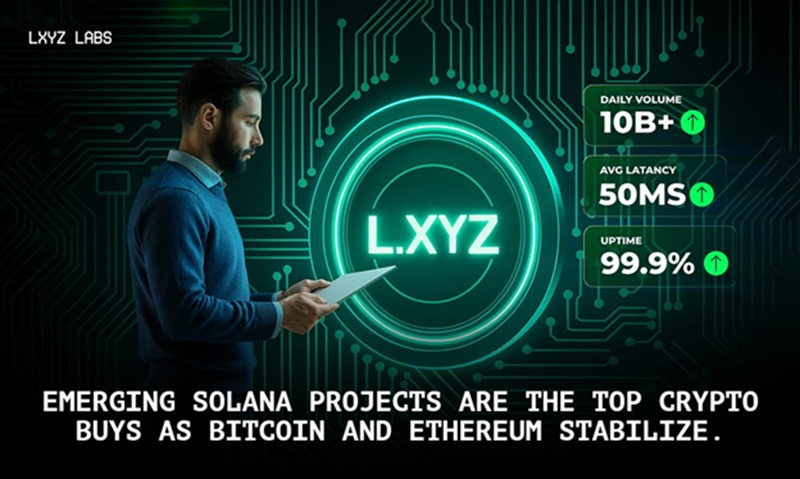
Table of LXYZ token presale growth and Solana market trends.

Crypto markets are stable with Bitcoin at about $90,057 and Ethereum at about $3,110, and institutional demand is moving to Solana and the overall activity of DeFi. The cooperation of the Sei Network with the world-famous smartphone manufacturer Xiaomi can be seen as a significant breakthrough that paves the way to mainstream blockchain access.

Sei says that under this deal all new Xiaomi smartphones sold outside the United States and mainland China will have its next-generation crypto wallet and discovery app installed by default in 2026. The integration offers instant access to Web3 applications and payment options through Google account or Xiaomi account logins, decreasing the onboarding friction of more mainstream users. The launch will focus on high-adoption markets such as Europe, Latin America, Southeast Asia and Africa where Xiaomi has a substantial market share. This partnership is also entailed with a 5M Global Mobile Innovation Program to assist mobile blockchain application and further enhancement of stablecoin payments at more than 20,000 retail outlets. These characteristics bring blockchain technologies nearer to regular consumers and may lead to wider usage by non-traditional crypto followers.

This collaboration is important as integrating a crypto wallet into consumer devices will skip the complexity of downloads and onboarding obstacles, introducing a default point of access to decentralized applications and payments. The project has the potential to increase on-chain activity and expand market participation, especially in third world nations where mobile connectivity leads to digital usage, through direct connectivity of blockchains to commonly used hardware. These cross-industry integrations are defining a new era of user acquisition and the useful application of crypto.

LXYZ – Leading the Charge as a Top Presale Crypto

LXYZ is the leader in presale crypto with its unique design, that appeals to professional traders and the performance of institutional quality in the high-speed network of Solana. The stage 1 price at $0.10 has been developing towards an increase of 0.15 at the next stage, and hopefulness is increasing concerning its development pattern. Early investor confidence is already indicated by the fact that the presale has already raised over $111, 000 in total.

Source –  SolidProof X

The architecture of LXYZ is based on deep pooled liquidity and reduction of slippage, which has made it an efficient spot and futures trading leverage trading environment. Its meta-pool and vAMM architecture is capable of high throughput and competitive execution costs, more than 90 times better than standard on-chain liquidity wrappers. LXYZ has good foundations in security and contract integrity, audited by SpyWolf, QuillAudits and SolidProof . Being a cross-chain settlement hub and trading platform with more sophisticated features, LXYZ stands to seize capital shifting away off-the-shelf to new Solana activities.

Why LXYZ Claims a Top Spot Among Presale Crypto Projects

The price structure, i.e., the price of LXYZ is currently at $0.10 in phase 1 and has a next tier of $0.15, but its architecture, which allows 100x leverage trading opportunities and professional types of orders on a decentralized market, is worthy of note. LXYZ is symbolic of the increased community engagement and commitment to liquidity with 1,101+ holders already staking tokens as part of the presale dynamics.

The project uses Rust/Anchor contracts that are performance and safety-friendly, and triple audits of SpyWolf, QuillAudits, and SolidProof make the project less risky to early adopters compared to technical risk. LXYZ is perceived as a viable competitor of consistent growth by market analysts following other Solana-based innovations because of its liquidity pooling cross-chain, mobile accessibility, and comparative fees. Potential investors with leading presale crypto positions could find LXYZ as a good position to enter before the ecosystem grows further.

Conclusion – Secure Your LXYZ Position Before the Next Leg Up

As the macro crypto markets stabilize, and institutional flows are diversified into Solana-type levels of innovation, projects such as LXYZ are a promising top presale crypto entry before the 3-4 orders scale to wider liquidity access. Its highly vetted contracts, sophisticated trading, and high presale parameters, with a price of $0.10 and a subsequent phase of 0.15, are what make it a project worth considering today. Get into the LXYZ presale early to place yourself ahead of the potential growth with Solana gaining momentum.

For more information about LXYZ visit the links below:


Website: https://l.xyz/

Buy Presale- https://l.xyz/#sale

Twitter/X: https://x.com/ldotxyz

Telegram:https://t.me/ldotxyz / https://t.me/lxyzgroup

Best Crypto to Buy Now as Solana Infrastructure Presales Begin to Stand Out From Meme Coins Like PEPE

0
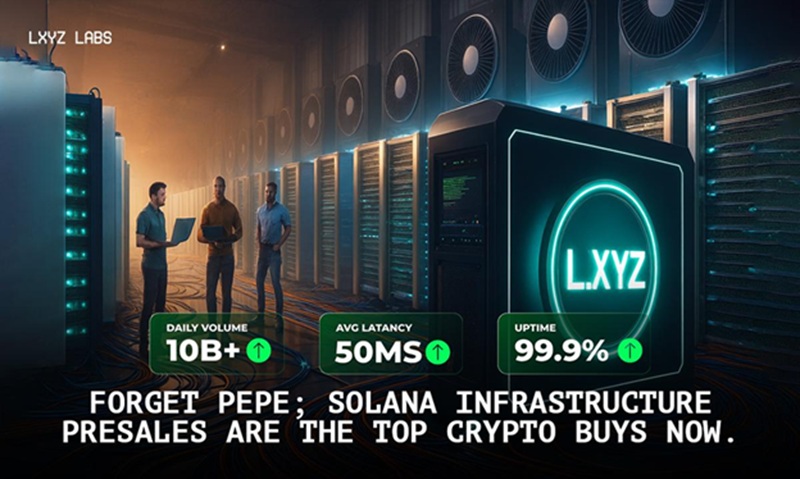
LXYZ token, which is a leveraged DEX with Solana-based liquidity.

The move by YouTube to allow U.S. creators to be paid using PayPal in PYUSD, the PayPal stablecoin, demonstrates the trend of big platforms to bring blockchain rails on board with no crypto exposure. Owners can store PYUSD in digital wallets or use it with merchants, enjoying the dollar peg, but avoiding the volatility issue. As PYUSD has a market cap of $4 billion, the move underscores the increasing belief in regulated stablecoins.

The reason this development is important is that payments infrastructure is becoming mature and regulatory conditions are becoming more transparent. The use of Big Tech supports the argument of blockchain efficiency in real-life monetizing, anticipating quicker, less expensive settlement in the digital systems. The outcome is a re-emphasis on chains and protocols that are able to support scale without friction.

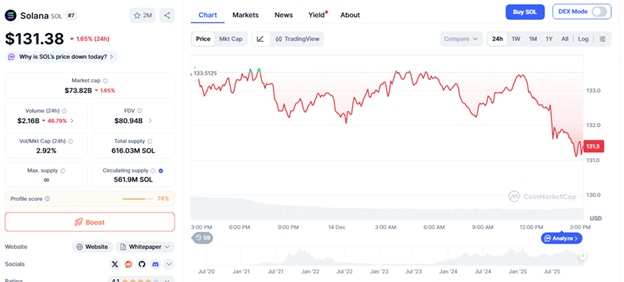
By December 2025, the ecosystem of Solana had hit a market cap of 74.46 billion, though its SOL was trading at around 132.51 with short-term consolidation. Technical indicators give reason to think that it may trend towards $140, but focus is now more on presales developing core infrastructure than rallies based on price making.

Meme Coin Pressure Versus Utility Builds

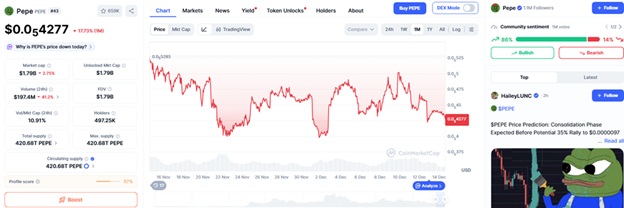
 PEPE dropped to 0.000004276, or 17 percent a month, following a reoccurrence of fair-launch concerns. The fall highlights the inability of sentiment-based assets to perform in a time when liquidity constricts and transparency turns out to be the priority.

Top Presale Crypto LXYZ Emerges as the Infrastructure Leader

Top presale crypto LXYZ is adjusting itself to the middle of the Solana infrastructure wave by prioritizing the quality of execution over narrative momentum. Developed as a non-custodial, leveraged DEX, LXYZ applies a hybrid model of an AMM and an order book to combine liquidity into one meta-pool. The focus of this structure is on minimization of slippage and accelerated fills, which is in line with the institutional style expectations.

Source –  SolidProof X

SpyWolf, QuillAudits and SolidProof have audited the protocol, confirming its emphasis on security and compliance with SPL. The presale (phase 1) is underway and the price of the token is 0.10 then 0.15 in the second phase. Many people already demand infrastructure-first designs, and the amount already raised is $111,000.

Why LXYZ Ranks as the Top Presale Crypto on Solana

The performance benefits of Solana enable LXYZ to execute leverage of up to 100x with a sub-400ms round trip, as well as to be completely on-chain and under the control of the DAO. Its unified liquidity model is the opposite of fragmented meme coin pools, which provides a more predictable trading environment. With the Firedancer upgrade of Solana nearing, the throughput of protocols such as LXYZ is set to increase in direct proportion to it.

The presale period provides visibility prior to subsequent repricing later in the life cycle (Phase 1 pricing still remains open). Buyers seeking audited utility over speculative trading are now considering LXYZ as a presale crypto to be listed early and high.

Conclusion

LXYZ is on the leading edge of the contemporary transition to audited and execution-driven infrastructure on Solana as market focus shifts away to meme-driven volatility. Phase 1 is live at $0.10 and has a definite roadmap, so early participation in the presale will provide an opportunity to enter before the prices increase.

For more information about LXYZ visit the links below:


Website: https://l.xyz/

Buy Presale- https://l.xyz/#sale

Twitter/X: https://x.com/ldotxyz

Telegram:https://t.me/ldotxyz / https://t.me/lxyzgroup